
Furniture Size RFQs: Label Units, Axes and State
Clarify a furniture size expression by keeping the original numbers with the exact product, then asking the supplier to label the unit, the meaning of each number and the product state being described. Do not automatically read an unlabelled three-number expression as length, width and height in centimetres, or treat it as a folded or packed size.
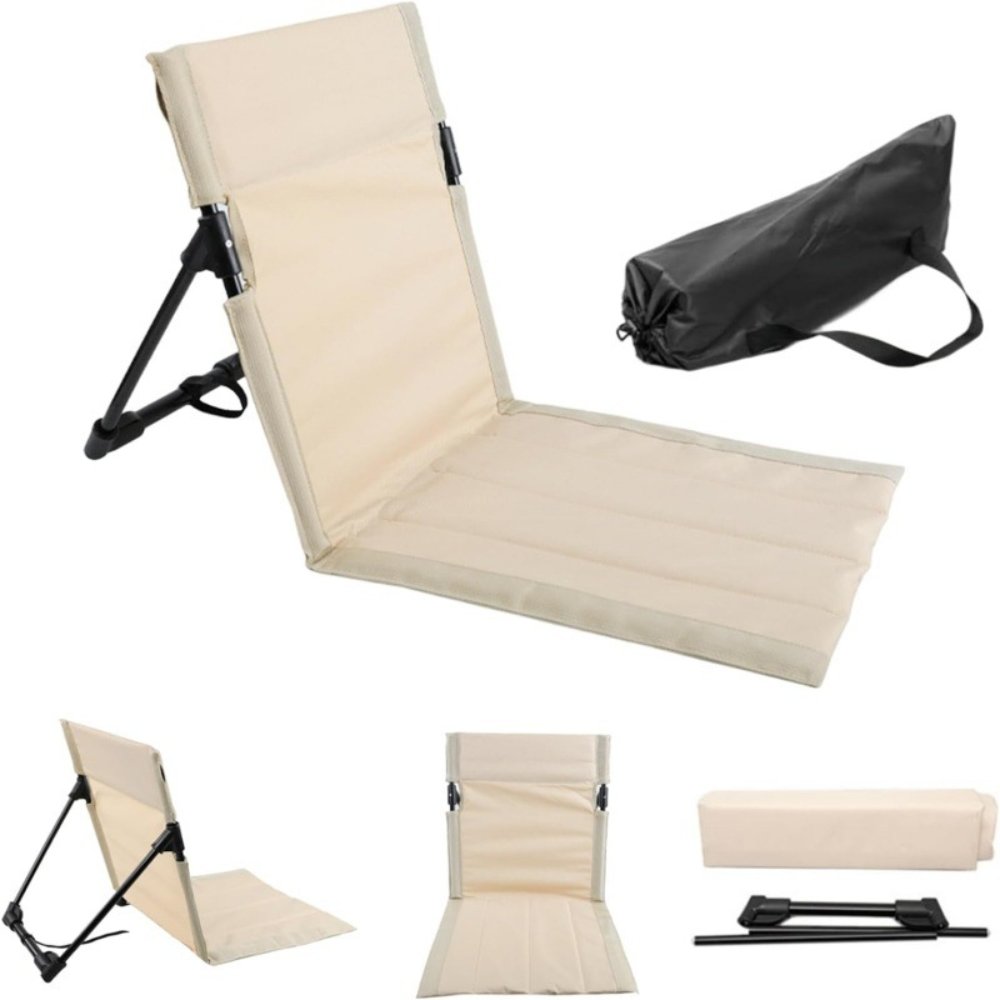
Official Floor-Sitting Backrest Chair appearance reference. The displayed views and components provide no scale, dimension axes or confirmed packed-size specification.
Retain the two actual product statements separately
The Floor-Sitting Backrest Chair listing displays 68*39.5*40.5. The Triangular Folding Stool listing displays 32*32*40. The reviewed product text does not explicitly label the units, dimension order or product state for either expression.
For a buyer sourcing wholesale backrest chairs, these are specific supplier-clarification questions. Keep the original expression beside its product reference while requesting a labelled drawing. A familiar-looking number format should not become a complete size specification through an internal spreadsheet assumption.
Ask what each number measures
Request the supplier’s description of the first, second and third values. Ask where each measurement begins and ends, and which unit applies. A marked drawing or annotated image can preserve those meanings more clearly than an unlabelled text string.
Do not decide that the largest value must be an overall length or that the final value must be a seat height. Different furniture forms can use different dimension conventions. Keep the supplier explanation with the applicable item rather than transferring the order of values from another product.
Identify the state represented by the size reference
Ask whether the expression describes an open product, a folded arrangement, a packed item or another stated condition. These references answer different purchasing questions. A catalogue image showing several views does not identify which view the unlabelled values describe.
If a buyer needs more than one state, request separate references for each. Keep product dimensions, folded-item dimensions and external packing dimensions in distinct fields. Do not use one unexplained expression as a substitute for all three.
Packed-bag appearance reference from the same gallery. The scene does not establish external dimensions, supplied bag counts or the state described by 68*39.5*40.5.
Compare the source expressions without translating them
The following comparison preserves the numbers as published and identifies the unanswered questions. It is not a measurement report or a declaration of actual dimensions for an offered sample.
Product reference
Reviewed expression
Supplier clarification needed
Floor-Sitting Backrest Chair
68*39.5*40.5
Unit, value order, endpoints and applicable product state
Triangular Folding Stool
32*32*40
Its own unit, value order, endpoints and applicable state
Requested packing reference
Not established by either bare expression
Separate supplier information for the actual packing proposal
Connect the drawing to the exact offered version
Retain the supplier item or version reference beside any returned drawing. If the product is offered in another configuration, ask whether the same dimension reference applies. The catalogue word Customizable does not establish that a requested size change is already available or included.
Where a revised drawing is proposed, keep the original and new references separately. Record which one the buyer selects. A similar chair appearance or shared supplier should not conceal a changed size basis.
Make the measurement record reproducible
A useful dimension record includes the product and version, the original catalogue expression, the supplier’s labelled values, units, endpoints and state. Keep the drawing identity or revision with that record. Another reviewer should be able to understand each number without reconstructing a message history.
If an actual sample is measured, associate the observation with that sample and the same reference conditions. This article reports no sample receipt, physical measurement or passed inspection. Keep an observed value separate from the supplier declaration so the evidence behind each is clear.
Outdoor application appearance reference. The setting and props do not establish product dimensions, included set contents, load capacity or a tested suitability result.
Check the basis before interpreting a difference
If a sample observation differs from a supplier number, first compare the product version, unit, endpoints and state. An open-product value should not be compared directly with a packed-item observation. Ask for clarification before treating the difference as a failure against an acceptance range that has not been agreed.
Do not infer load capacity, stability, comfort or suitability from a dimension expression. Those requirements need their own applicable supplier responses and evidence. A labelled size reference resolves the meaning of the numbers without verifying unrelated performance.
Carry the selected size basis into the quotation
Keep the accepted drawing and dimension basis with the quoted item. If the supplier changes the product state, configuration or packing proposal, ask which references need updating. Retain the earlier selection and identify the change rather than overwriting the original expression with an unexplained conversion.
Preserve each original number expression with its own product.
Ask for units, dimension order and measuring endpoints.
Separate open, folded and packed references.
Retain applicable drawings, actual sample observations and revisions.
Frequently asked questions
Can 68*39.5*40.5 automatically be labelled centimetres?
The reviewed product text does not explicitly state the unit. Ask the supplier to provide it with the dimension meanings.
Does the order of numbers necessarily mean length, width and height?
The order is not labelled in the reviewed expression. Request a supplier drawing showing what each value measures.
Can the stool’s dimension convention be applied to the backrest chair?
Keep the references separate until the supplier explains each product’s unit, endpoints and state.
Does a bag photograph confirm packed dimensions?
The photograph supplies no scale or packing specification. Ask for separate dimensions applicable to the actual packed offer.
Send the exact product and dimension questions through Jiuhui Outdoor contact. Compare the product catalogue and related topics in the article archive.
#Backrest Chairs#Dimension References#Supplier Drawings#Product States#B2B Purchasing