
Sofa Set RFQs: Identify the Floor-Contact Parts
For an outdoor sofa-set enquiry, ask the manufacturer to identify the actual parts or frame areas that contact the supporting surface on each offered furniture component. Keep that description with the component reference, supplied condition and quotation version. A patio photograph does not establish protective feet, end caps, floor suitability or a tested stability result for the proposed set.
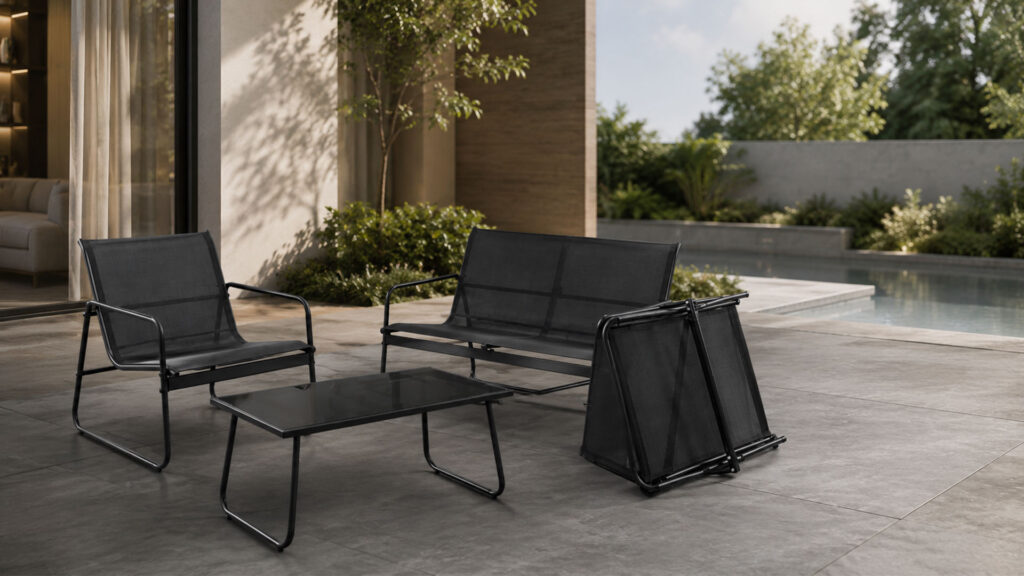
Outdoor-furniture category scene. Ask which actual offered pieces and floor-contact parts apply; the scene does not establish a confirmed set, protective feet, ground suitability or a performance result.
Start with the actual offered furniture component
Jiuhui’s Sofa 4-Piece Set listing provides a product reference for a manufacturer enquiry. Keep the actual proposed set and its manufacturer-identified components visible in the correspondence. Ask which component the floor-contact reply covers before discussing a particular part. A category arrangement can show seating and a table without defining the contents of the commercial proposal.
Use the supplier’s component name or identifier beside the question. Where the manufacturer proposes another version of a chair, bench or table, request its applicable reference. Keep another furniture item pictured nearby separately identified. This allows the buyer to ask about the base of an actual offered component without applying one catalogue arrangement to every item in the quotation.
Ask the supplier to map the contact areas
Request the manufacturer’s description of which parts or areas of the offered component are intended to contact the supporting surface in its stated condition. Ask for an applicable image, drawing or component reference where provided. The record should make the described area identifiable without treating a shadow, a curved frame appearance or a partially hidden joint as a separate foot.
If the manufacturer identifies a continuous frame area, a foot or another type of contact component, retain its actual terminology. Where the available view leaves an area hidden, request the supplier’s explanation and keep the limitation visible. Do not fill an unseen location with an assumed pad, end cap, adjuster or other part that the manufacturer has not included in its reply.
Separate folding-table and chair category references. The poster does not show the quoted folding bed or establish its hardware, maintenance instructions, factory ownership or advertised capabilities.
Clarify the supplied condition of any named part
Where the manufacturer identifies a foot, cap, pad or another contact component, ask how it is represented in the actual offer. Retain its product or part reference and the manufacturer’s description of the supplied condition. A discussion can establish whether the part belongs to the proposed assembled item without assuming a separate accessory pack or an optional spare-parts service.
Ask the supplier to distinguish any actually included, separately proposed or excluded part where relevant to its offer. Keep an unanswered supply question open. The buyer should not derive a part count, material or compatibility statement from a photograph of the furniture base. Request the actual proposal for the selected version rather than treating a possible component name as confirmed supply.
Buying field
Requested supplier response
Set reference
Actual proposed Sofa 4-Piece Set and quotation version.
Furniture component
Manufacturer-identified chair, bench, table or other offered item.
Contact area
Supplier explanation of the part or frame area contacting the supporting surface.
Component reference
Actual part name, identifier or applicable view where supplied.
Supplied condition
Manufacturer description of assembled, included, separate or excluded scope.
Sample association
Actual component sample or reference covered by the reply.
Keep surface suitability and performance separate
Identifying a floor-contact part does not establish what a furniture component will do on every supporting surface. Ask the manufacturer for any applicable product guidance needed by the enquiry and keep its stated scope with the actual offer. The category patio setting should not become a declaration that the proposed furniture protects a floor, resists slipping or suits a particular ground condition.
Apply the same boundary to stability, load and weather statements. A component-identification reply describes which actual areas or parts the manufacturer is discussing. It does not provide those performance results. Retain any separately provided guidance or record with its identified product and version rather than inventing a limit, a test condition or a claim based on how the furniture appears in the scene.
Link the component map to the proposed sample
Ask which actual sample, drawing or manufacturer reference corresponds to the described contact areas. Keep the component identity, represented condition and quotation line together. Where a supplied part has another reference, ask how it relates to that particular offered version. This creates a usable purchasing record without asking a receiving team to infer hidden components from a general set photograph.
If the manufacturer revises the product or contact component, request an explanation of which previous reference changes. Retain the updated description and the actual sample or offer version it covers. A revised reference should remain associated with the affected furniture component. It should not silently replace the description of every item in the set or imply that another product uses the same parts.
Actual Sofa 4-Piece Set reference. Confirm the manufacturer-proposed component and floor-contact scope; the image does not identify unseen feet, pads or a tested supporting surface.
Use the outdoor-furniture images for identification
The homepage scene presents dark seating, a low table and a separate folded furniture frame in a patio setting. The company poster shows different folding tables and a chair beside a building image. These are category references for an enquiry, rather than a complete component schedule, proof of facility ownership or an agreed supply configuration for the selected sofa-set offer.
The Sofa 4-Piece Set gallery gives a separate product reference. Its appearance does not reveal every contact surface or identify an unseen protective component. Complete the enquiry with the manufacturer’s actual contact-area description and supplied-part reply. Keep material, part quantity, commercial availability and performance questions in the actual scope the supplier provides, with unresolved points retained for clarification.
Buyer FAQ
Does a patio photograph prove that protective feet are included?
No. Ask the manufacturer to identify the actual floor-contact parts and their supplied condition for the selected furniture component.
What should a contact-area record identify?
Keep the offered set, furniture component, described contact area, applicable part or view reference, and sample-to-quotation association together.
Can a visible frame base establish floor protection or stability?
No. A component appearance is not a performance result. Request any applicable manufacturer guidance separately and retain its stated product scope.
How should a changed foot or contact component be recorded?
Keep the manufacturer’s revised part or contact-area reference with the affected product version, sample and quotation line.
Use the Sofa 4-Piece Set reference, identify other folding furniture separately, and request the actual floor-contact component proposal.
Identify the actual offered furniture component.
Request the supplier’s contact-area and named-part reference.
Keep supplied condition, sample and quotation applicability together.
outdoor sofa floor contact component scopeB2B supplier sample record